

Fino La Ina – around 1962 (Pedro Domecq)
A piece of sherry history – one of the most emblematic brands of Fino sherry
Hosting a sherry tasting is always a great opportunity to dig into my collection and bring a surprise bottle. I decided to open one of my old bottles of Fino La Ina as an encore to the actual line-up.
This bottle didn’t have a year embossed in the base of the glass, so in that case I tend to look for typography details and compare them to old advertisements. Between the 1930s and 1950s the name Pedro Domecq used to be written on a kind of Gregorian staff with music notes that evoked the name. This changed around 1957, when the Castillo de Macharnudo was depicted on the label along with the name Pedro Domecq in elegant handwritten characters. Around 1965 the castillo became even more prominent and was surrounded by a golden ring. This places our bottle in the late 1950s or early 1960s, as confirmed by the 1962 ad below.

A 1962 advert for Fino La Ina, with the same label and the same fonts as ours
Fino La Ina history
The soleras of Fino La Ina were established in 1919 and became one of the most emblematic wines in the Marco de Jerez. However in the 1980s the family business started to move owners. After Pernod Ricard acquired Allied Domecq in 2005, a lot of the Domecq brands were sold off. Most of the iconic sherries like La Ina, Botaina, Rio Viejo and Viña 25 went to Bodegas Lustau in 2008. They are now housed in old Domecq buildings on Calle Arcos. The Fundador brandies were kept for some time, but they were sold to Emperador and Gonzalez Byass in 2016.
The name La Ina apparently comes from the Battle of Guadalete where the Arabs started their conquest of the Iberian Peninsula. The plains where the battle took place were named after an Arab war cry. Even today this location is still known as La Ina.
Sometimes these old Finos can have a dirty (reductive) aroma, but this wine came out really fresh (after filtering out the debris of course). I keep asking myself what it is that made this wine so special, so well resistant to time? And how long will this bottle ageing continue to give great results? It’s clear that we haven’t reached the limits yet of these gems from legendary houses like Domecq, De La Riva, Agustin Blazquez, J.M. Rivero and others.

Lead, or lead-tin alloy foil around the cork (now oxidized), fairly common back then but now banned
Fino La Ina (Pedro Domecq, +/- 1962)
Nose: probably closest to a well-aged Amontillado now. However it should be noted that the Fino character is still alive and kicking. Lots of haybales, hints of flor, along with coastal elements like dried seaweed and light acetaldehydes. The nuttiness is really big, with lots of salted almonds and toasted hazelnuts. On the other hand also ‘evolved’ notes of dried fruits, like excellent dried apricots that we wouldn’t expect from a fresh Fino. Hints of sesame oil and butter biscuits. Whiffs of a dried spice mix, even some slightly medicinal notes. Then also a lovely glyceric hint of polished oak or warm varnish.
Mouth: a brief touch of sweetness appears, more towards caramel, toffee and desserts with nuts. A very mild fruity note too (dried apricot) along with herbal infusions. Then a subtle metallic note appears, which I find a bit less impressive – it takes away some weight, somehow. Then back to the nervous, coastal side, making this less Amontillado than the nose suggested. Clear iodine and probably a tad more bitterness than the original wine would have got. Lemon acidity, citrus peels, a little aniseed and a toasted oak. The herbal notes become firm and there’s certainly more drying chalkiness in the end, along with some steeped tea and hints of walnuts in the aftertaste.
Availability: only in forgotten attics or your grandparents’ cellar (provided they had good taste).
Summary: Complex and aromatic on the nose. A tad sharper and more austere on the palate, but still a wine that proves the potency and ageing potential of Fino sherry. A Jerez gem that stood the test of time, and a great advocate for the expertise of the Pedro Domecq house.
4.5
Excellent
About the Author

Ruben is a Certified Sherry Educator who fell in love with sherry some 25 years ago, but switched to a higher gear in 2013 and started writing about it. Lived in Madrid for a couple of years, now back in Belgium. I also run a whisky blog over at www.whiskynotes.be
Related Posts
Fino La Ina (Pedro Domecq – 1967) →
Viña 25 Pedro Ximénez (Pedro Domecq) →
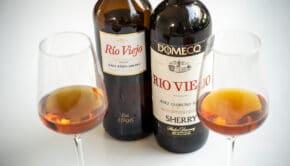
Río Viejo Oloroso (Lustau vs. late 1970s Domecq) →