

Acidity and chemistry in ageing Oloroso
Oloroso is often described as one of the richest and most powerful expressions of sherry, especially when they are well-aged. Deeply coloured, aromatic and intensely structured, it develops wonderfully in a solera system. Yet one aspect of its character often surprises even experienced tasters. Despite being made from Palomino grapes – a variety with relatively low natural acidity – old Oloroso can still show remarkable freshness and a marked acidity. Some time ago I received this question on social media. I decided to turn my concise answer into this longer background article.
The explanation for the high acidity does not lie in the grapes themselves: Palomino Fino is indeed known for its low acidity. The key element is the slow chemical transformation that take place during oxidative ageing. Oxidative ageing (in Oloroso but also Amontillado, Palo Cortado and sweet wines of course) gradually reshapes the balance of acids in the wine. Rather than simply increasing or decreasing acidity, the ageing process modifies which acids dominate and how they are perceived on the palate. Let’s look at a few elements that play a role in the changing profile of oxidative ageing.
Starting point: low-acid Palomino wines
The base wine for Oloroso is fermented from Palomino grapes grown on the white albariza soils around Jerez. For oxidatively aged sherry they usually work with grapes from Carrascal or other pagos that are further inland, where it is considerably warmer. These grapes have a low to moderate natural acidity, generally around 3.7 – 3.8 g/l, with a high pH and low malic acid content.
Where does acidity originate?
The acidity of wine comes from three main acids that naturally develop in grapes:
- Tartaric acid
The most important type, originates in the grapes and is very stable. Palomino starts low, but the long ageing of sherry wines increases this level. - Malic acid
Sharp, green apple-like acidity, also from the grapes. Less stable than tartaric acid, this is easily metabolized by bacteria into lactic acid which softens the wine. In Jerez malic acid levels are low, and they disappear almost entirely during early ageing. - Citric acid
Usually negligible in (Oloroso) sherry, but it gradually transforms into diacetyl and acetic acid which can play an important role in old wines.
In warm climates like Andalusia, malic acid levels are typically low at harvest, leaving tartaric acid as the dominant acid in the young wine. While the initial acidity may be moderate, the wine will undergo decades of transformation inside oak casks.
Small acid adjustments may occasionally be made in the base wine before fortification or right before fortification, usually with tartaric acid. However, these corrections are not as common in Oloroso-style base wines as they are in Fino profiles (or in unfortified table wines). In biological ageing the acidity is much more critical since you need to provide optimal conditions for the delicate flor to grow. For Oloroso wines it’s safe to say the long-term structure of the wine is largely shaped by ageing rather than initial acidity or early corrections.
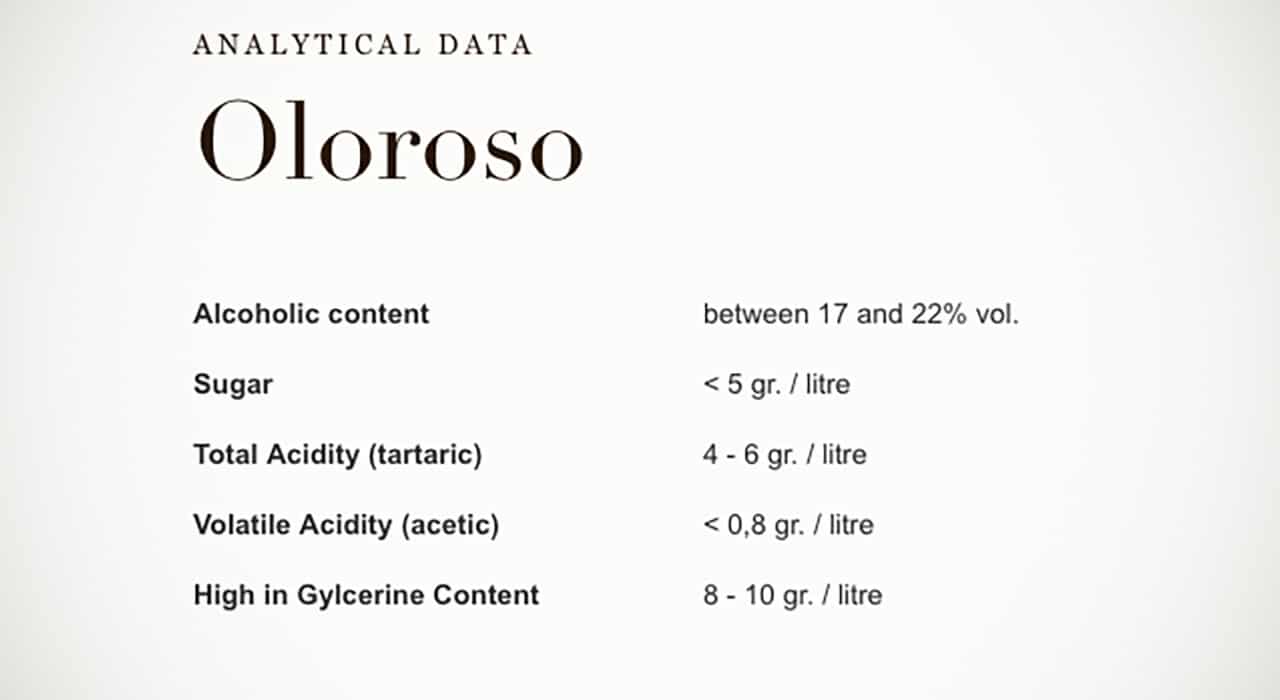
Analytic data of Oloroso wines (from www.sherry.wine)
Five reasons for high acidity in Oloroso
In the early years of maturation, there will be an initial dip in the total acidity. This effect seems to be more noticeable in Palo Cortado than in Oloroso. The primary reason is that tartaric acid may combine into potassium crystals. In Palo Cortado there may also be an influence of the bigger lactic side. However this won’t make the wine taste softer, as other processes start to compensate for the loss of tartaric acid around the same time. The total acidity will quickly pick up again.
By the time most Oloroso wines are ready to drink (from around 5 years, let’s say), there are at least five different processes that have increased the total acidity again:
1. Concentration through evaporation
A major factor influencing acidity in Oloroso is evaporation. The traditional American oak casks used in Jerez are slightly porous, allowing water and ethanol vapours to slowly escape over time. This process – known locally as merma – reduces the volume of wine in the barrel. In the warm Andalusian climate, evaporation rates of 3–5 percent per year are common.
Water and alcohol evaporate most because they have a moderate to high volatility. Other components of the wine remain due to their larger molecular size, polarity or lower volatility. Organic acids, sugars, glycerol, minerals and phenolic compounds gradually become more prominent as the wine gets more concentrated. As a result, even if total acidity does not increase dramatically in absolute terms, its concentration relative to the wine’s volume may rise. Slow concentration contributes to the dense structure and full profile of old Oloroso wines.
2. Formation of new acids
Another factor is the oxygen exposure (remember there’s no flor in Oloroso) which drives a variety of chemical reactions. For instance ethanol can gradually oxidize to form small amounts of volatile acidity, mostly acetic acid.
Typical young wines might show volatile acidity levels around 0.2–0.3 g/L, whereas mature Oloroso can reach values closer to 0.6–0.7 g/L. The legal limit for sherry is 0.8 g/L. Volatile acids contribute noticeably to the aromatic and structural profile of older wines. Whereas volatile acidity is often seen as a negative element in classic wines, they are generally seen as a positive thing by sherry lovers if it’s part of a balanced profile.
At the same time, secondary acids such as succinic acid (which provides a more savoury quality) may also increase slightly through slow biochemical and oxidative pathways.
3. Changing acid composition over decades
The ageing process does not simply modify the quantity of acidity; it alters its composition. Young wines are dominated by grape-derived acids such as tartaric acid. Over time, oxidative acids and fermentation-derived compounds start to play a larger role. Acetic acid increases slowly, while other components such as aldehydes and esters develop through oxidation.
These compounds do not necessarily increase measurable acidity, but they influence how acidity is perceived on the palate. In older Oloroso, the sensation of structure often comes from a combination of volatile acidity, dry extract and oxidative aromas. The result is a wine that may taste vibrant and firm despite having moderate analytical acidity.
4. Extraction from wood
Long contact with American oak casks introduces phenolic compounds, tannins and lignin-derived acids. Contrary to other winemakers, sherry bodegas tend to use very old casks in order to minimize the primary oak-driven aromas and tannic qualities, but still this can play a role in the long term. Wood compounds increase the structural dryness and perceived acidity, but although they are chemically measurable, they will not play a critical role in most profiles.
5. Perception and sensory contrast
Oloroso is usually around 18–20% alcohol and fully dry. With no residual sugar to soften the palate, the acids that are present become more noticeable. Oxidative compounds (e.g. acetaldehyde derivatives) also sharpen the perception of freshness.
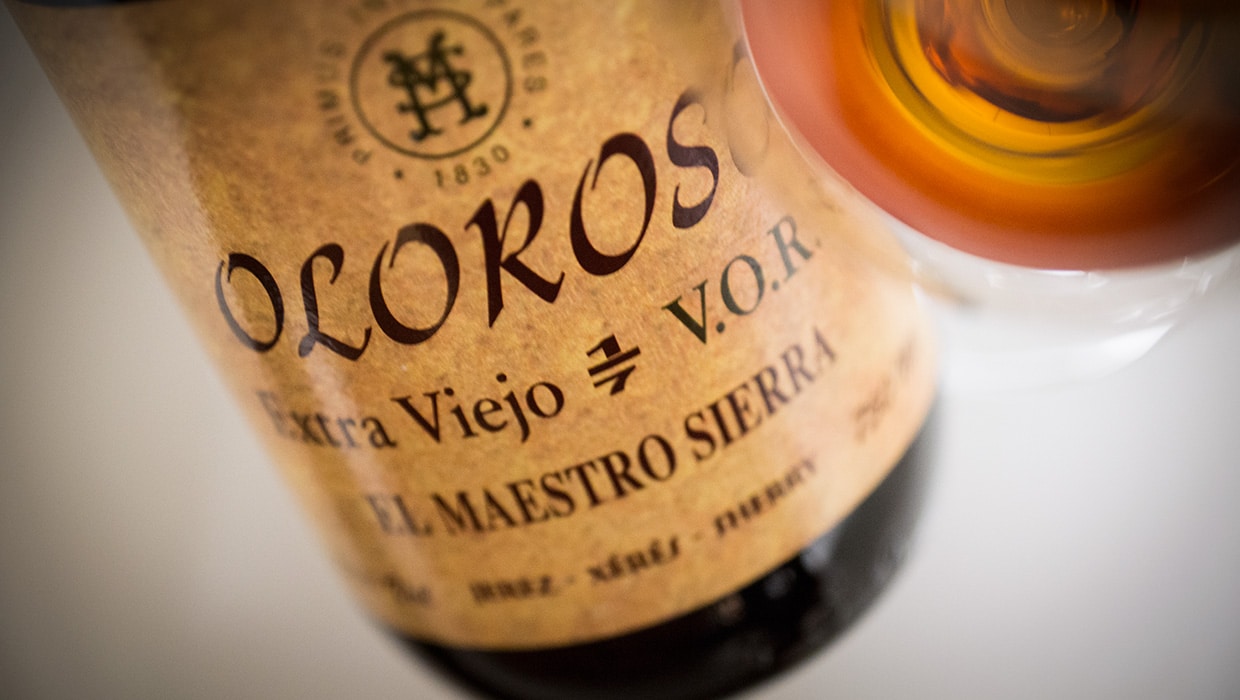
Oloroso Extra Viejo – El Maestro Sierra
Scientific background
In case you’re interested, here’s an interesting study conducted at the University of Cádiz (Valcárcel-Muñoz et al., 2022):
https://pmc.ncbi.nlm.nih.gov/articles/PMC9777549/
(also interesting to learn about the differences between Palo Cortado and Oloroso on a chemical level).
Why old Oloroso still feels fresh
So we’ve learnt that acidity increases notably in oxidatively aged sherry wines as they age in a solera system, despite the modest grape acidity in the base wine. It is one of the reasons why very old Oloroso can still feel fresh and vibrant.
This vibrance is the result of different elements. Firstly the dryness of the wine, without residual sugar to soften its edges. At the same time oxidative compounds and aldehydes sharpen the aromatic profile. Finally, the gradual increase in volatile acidity and concentration of extract give the wine a structural backbone that supports its richness.
Over decades of ageing, the chemistry of the wine subtly reorganizes itself. The original acids of the grape fade into the background, replaced by a complex interplay of other acids, oxidative compounds and concentrated extract. What remains is a wine that illustrates how time, oxygen and evaporation can reshape acidity into something magical.
About the Author

Ruben is a Certified Sherry Educator who fell in love with sherry some 25 years ago, but switched to a higher gear in 2013 and started writing about it. Lived in Madrid for a couple of years, now back in Belgium. I also run a whisky blog over at www.whiskynotes.be
Related Posts
Palo Cortado – Señorio de Callao (León Domecq) →
Canasta 20 Years VOS (Williams & Humbert) →
La Bota de Oloroso 98 ‘Bota NO’ (Equipo Navazos) →